
What is a channel incentive program?
A channel incentive program is a strategy used to motivate channel partners (resellers, distributors, or dealers, etc) to achieve specific business goals. These programs offer rewards for actions like increasing sales, promoting brand awareness, or improving product knowledge. By offering meaningful incentives, businesses can boost channel engagement, strengthen partner relationships, and drive growth across the channel.
Typically, the goal of sales channel incentives is for business-to-business (B2B) brands to increase channel sales, elevate average sales performance, and achieve better channel partner loyalty and retention. The idea is to develop better, more meaningful and mutually beneficial relationships with channel partners so that, together, you sell more products to customers and increase profit margins.
Why use a channel incentive program?
The most common reasons that brands use channel incentive programs are to increase revenue, retain customers, build company or brand loyalty. Incentives can make a big difference in distribution channels, especially those where brands don’t have much wiggle room in terms of product changes or price.
In many B2B industries, product quality is dictated by government regulations or industry standardizations. Groundbreaking innovations in technology or design are uncommon and, when they do happen, they must pass rigorous testing and approval protocols. This may leave brands unable to offer channel partners much that the competition doesn’t. In fact, 86% of B2B buyers see little difference between their suppliers.
The key to standing out among B2B competitors is to be a brand that’s memorable, convenient, and enjoyable for channel partners to do business with. Channel incentive programs help with that.
What are examples of channel incentive programs?
Typically, when someone asks “What is a channel incentive program?”, what they mean is “Show me examples of successful channel incentive programs.”
The most successful channel incentive programs are designed with a clear understanding of the participants’ preferences and needs. All sales channels are unique in some way. Partner businesses and salespeople have varying priorities and motivations that will determine how effective your incentive rewards will be.
Along with being attuned to partners’ objectives and interests, effective channel incentive programs keep your partners engaged with new reward-earning opportunities. Luckily, brands have a variety of options when it comes to which rewards, they offer and how they fit incentive programs into their overarching channel sales and marketing strategies. Your channel incentive program never has to lose its luster!
Some examples of channel incentive programs:
Channel Sales Incentives
Sales-based channel incentives are the most common type of partner incentive. Channel partner reps are awarded based on sales volume, margin, product type, or for exceeding goals for incremental growth. These incentives help manufacturers scale vertically, horizontally, or improve profitability. Channel sales incentives can take the form of reloadable or single-use debit cards or gift card rewards for short-term promotions, or points-based merchandise rewards and incentive travel rewards for longer-term, loyalty-focused promotions.
Channel Rebates
Channel rebate programs generate demand and influence buyer preference. Partners are awarded based on order size or frequency, typically for a specific product.
Rebates are a great way to thank your channel partners for their repeat business and make yourself more appealing than the competition. Offering a certain percentage of their purchase amount back when they buy in bulk or during seasons preceding a product’s demand surge.
Channel rebates can also serve as a data collection strategy, with required forms and supporting document uploads that supply valuable sales and marketing intelligence.
Referral Incentives
Referral incentives are a valuable tool manufacturers and distributors can use to expand their reach and increase market penetration. Channel partners are rewarded for deal registration and identifying new opportunities. An HVAC contractor, for example, might be awarded points for registering a potential end user that turns into a qualified opportunity. Referral incentives can take the form of points-based rewards, gift cards, debit cards, or incentive travel promotions.
Incentive Group Travel
You can reward your top-performing salespeople or most-valuable customers with a group incentive trip. When they share unforgettable experiences with your team members and get to know each other on a more personal level, salespeople and customers develop a strong emotional attachment to your brand. The trust built on incentive trips can vastly improve the productivity of channel partner relationships.
Loyalty Incentives and Partner Retention
High-performing channel partners might have already reached their ceiling in regard to sales volume or profitability. But those highest-performing partners are competent, driven, and in high demand. They’re exactly the partners that manufacturers and distributors cannot afford to lose. Channel loyalty programs are less about growth and more about retention: solidifying loyalty with top partners to keep them away from the competition. These programs often combine points-based rewards, exclusive travel experiences, and public recognition to reinforce long-term commitment.
Sales Performance Incentive Funds (SPIFFs)
SPIFFs are typically associated with sales promotions designed to push certain products off shelves quickly. Debit or gift card rewards make excellent SPIFFs. Because these cards are so versatile, recipients typically use them quickly, so your reward will have an impact sooner rather than later.
Sales Enablement and Training Incentives
Keeping your channel partners’ training up to date is one of the most necessary but notoriously difficult tasks in channel management. It’s the responsibility of manufacturers, distributors, and wholesalers to make sure that channel partners are knowledgeable and have the support they need to sell effectively.
Provide training rewards for taking online quizzes, gaining certifications, or attending tradeshows and conferences can pay huge dividends. Channel partners often sell for a variety of different brands—and they are more likely to sell what they know.
On-the-Spot Rewards
When you catch channel partners in the act of giving 110%, showing extreme competency, or coming up with clever solutions, you can reward them on the spot with physical or digital reward certificates. These certificates grant partners with online reward points that they can spend in an online rewards catalog with millions of items for them to choose from. It’s a great way to connect the feeling of unexpected recognition and rewards to your brand.
Channel Marketing Incentives
Channel marketing incentives motivate channel partners to help market your products and build your brand throughout the supply chain. MDFs (marketing development funds) and co-op (cooperative marketing funds) are collaborative incentive structures that help manufacturers and channel partners market products more effectively. Partners can earn rewards for executing co-branded campaigns, refreshing subscriber lists, reporting closed sales, and other marketing activities that drive awareness and demand at the local level.
Activity-Based Incentives
Channel partners can act as extensions of your business beyond just sales and marketing. Activity-based partner incentives reward channel partners for managing relationships and contracts throughout your supply chain, scheduling demos, submitting data, or other activities that are beneficial for your business. These incentives are especially effective when you need channel partners to perform behaviors that don’t directly result in an immediate sale but strengthen your overall channel operations and data quality.
VAR Incentives
VARs (value-added resellers) are channel partners who add features and services to your products and then resell them as a “turn-key” solution. VAR incentive programs are used to educate resellers about your products and to motivate them to incorporate your products as part of their resale solution. These programs can be a powerful tool for manufacturers and distributors to expand their reach and market penetration, particularly in technology and enterprise verticals where solution bundling drives purchasing decisions.
Sales Competitions
Adding a competitive element is a great way to spice up a typical sales promotion. The friendly competition can add a spark of motivation to salespeople who earn bragging rights in the form of rewards or seeing their name at the top of a public leaderboard.
What is a channel incentive program… and how do you create one?
Launching a successful channel incentive program requires key steps:
Set your channel incentive program’s goals.
Define your strategic business objectives at the outset. Articulate them clearly and simply so everybody involved—from your internal team to your channel partners—understands what you want to accomplish and why.
Your goals might include increasing overall sales volume, driving adoption of a specific product line, improving partner retention, or capturing market share in a new segment. Without clearly defined goals, you’ll have no way to measure success or make informed adjustments as the program evolves. Keep the number of behavioral objectives manageable: if participants can’t repeat back the actions needed in a simple sentence, the program is too complicated.
Establish your budget.
If you budget your channel incentive program correctly, it doesn’t have to be a money pit; it can even be self-funding.
In Extu’s experience running channel incentive programs across industries, minimum effective spend is approximately $250 per participant annually, with consistent year-over-year performers investing closer to $500 per participant. Some of the most aggressive programs invest $1,000 or more per participant.
Assume rewards will ultimately represent between 1-3% of your sales revenue volume. In the most effective programs, participants earn enough points to get a meaningful reward—such as a domestic round-trip airline ticket worth about $400—within the first 12 months.
Budget formula to keep in mind: number of participants × number of behaviors changed × number of rules per behavior = adequate spend.
Determine what will motivate your audience.
Understanding what will actually motivate your channel partners is critical.
Consider what your partners already have access to and what would feel like a genuine reward above and beyond their normal compensation.
Non-cash rewards—merchandise, travel experiences, etc.—outperform cash in driving behavior change because cash is quickly spent on routine necessities and forgotten, while merchandise and travel have lasting trophy value. The ideal program incorporates multiple reward types to account for different motivational profiles among participants:
- Super-Savers who hoard points and feel rewarded by their account balance
- Marathoners who pick a big-ticket goal and work toward it over time
- Earn-and-Burners who redeem quickly and are motivated by constant activity
- The Chill Ones who earn passively but quietly redeem for items they value
Choose incentive rewards to offer.
Select rewards based on your goals, promotion timeline(s), and the interests of your audience. Brand-name merchandise tends to be the most desirable incentive type, followed by cash, travel, gift cards, and recognition items.
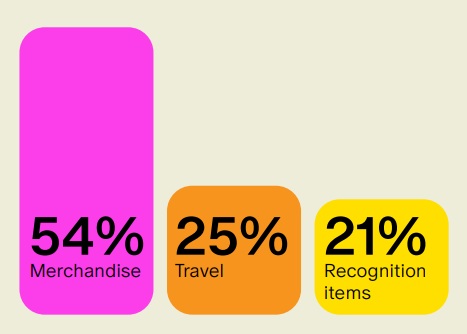
A typical non-cash reward allocation breaks down to approximately 54% merchandise, 25% travel, and 21% recognition items.
Better rewards mean partners earn and redeem them faster. Offer enough enticing reward choices so that each individual can set their own preferences and targets, and make sure the rewards catalog stays fresh over time.
Identify key performance indicators (KPIs) to track return on investment (ROI).
Set clear KPIs at the outset so you have objective benchmarks for evaluating program health. Key metrics to track include:
- enrollment rate
- participant engagement rate
- points earned versus points redeemed
- redemption rate
- sales lift
- revenue ROI
For context, Extu’s research across our most successful channel incentive programs shows that closed-enrollment programs typically reach 60% active participation after one year and 75% after two years, while open-enrollment programs average 24% after year one and 34% after year two. Redemption rates start around 45% at the one-year mark and climb to approximately 60% by year two—with about 10% annual improvement after that. Use these industry benchmarks to assess whether your program is on track or needs adjustment.
Plan specific sales promotions.
Design promotions that keep your program dynamic and prevent participants from coasting. Incentive programs create their own sales rhythms, as sales tend to slow before a program begins and spike at the outset and again just before a promotion concludes. Plan your promotion calendar to maintain momentum throughout the year.
Vary your tactics: use SPIFFs for short-term product pushes, bonus point events to re-engage dormant partners, seasonal promotions tied to demand cycles, and learning incentives to build product knowledge between big sales pushes.
The most successful programs follow an implement → reinforce → optimize → expand sequence, starting simple and layering in complexity as you learn what works.
Promote the program to keep engagement and participation high.
You cannot over-communicate your channel incentive effort. Tell participants what you’re going to do, when you’re going to do it, how you’re going to do it, and why they should care. Now do that over and over. The more you communicate, the more partners enroll, earn points, redeem rewards, and respond to promotions. Effective messaging strategies include:
- Mentioning the program in routine partner newsletters
- Sending periodic usage stimulation emails
- Prominently displaying the program on your website
- Distributing printed or digital reward catalogs
- Using on-site signage at partner locations
Segment your communications so that channel owners and leaders receive more strategic messaging while salespeople and customer service reps get tactical, action-oriented content.
Track sales, engagement, and other program data to determine ROI.
Collect data from multiple sources to get a complete picture of program performance. Get order data from internal departments, solicit data from channel partners, and capture purchase data from end users wherever possible. The more data you gather from different points in the sales process, the better you can assess both the design and the functionality of your incentive program.
In sales channels, things change daily. Your channel partners’ interactions with end users are your best early warning system for marketplace and competitive developments. Conduct ongoing measurement, analysis, and adjustments rather than waiting for an annual review. Award points monthly so participants can watch their balances grow in real time, creating a stimulus-response cycle that drives more earning and redemption behavior.
Use what you’ve learned to improve your program!
Every initiative starts with a burst of energy, coasts, cools down, and then needs to be re-energized. Anticipate and plan for this natural rhythm at the outset. Come up with new ideas, themes, special events, promotions, and different communications to maintain motivation throughout the program lifecycle.
Don’t over-engineer from the start: launch with the basics, even if that means relying on manual processes, then measure all elements of the program at the 6-12 month mark to make changes based on what you’ve learned.
The best-performing programs treat every cycle as an opportunity to test, learn, and modify. At Extu, we consistently sees simple programs outperform complex ones. Keep your program fresh by updating promotions, introducing points bonuses, refreshing your reward catalog, and sharing success stories that keep participants inspired and engaged.
Want more channel incentive program insights?
Still hungry for info on sales channel incentives? Want even more answers to the question “what is a channel incentive program?” We’ve got plenty of resources!
Check out our incentive FAQs, our white paper study on incentive program benchmarks, or our free ebooks and guides!
We also offer free consultations and product demos with our channel incentive program experts.