

When you sell your products through distributors, you gain access to those distributors’ customer relationships and their local or niche markets. This works out for the distributor because they can stock their shelves with more options for their customers. In exchange, though, you give up control over how often distributors sell your brand. If your brand is one of multiple options with similar price points, what makes distributors recommend yours?
In many cases, the unfortunate truth is that distributors choose whatever brand is cheapest or most convenient at the time. A distributor loyalty program helps you become a favored brand when you’ve covered all your other bases (product quality and cost, service, and support/enablement). It’s a structured system that rewards distributors for selling your product, or any other behavior you deem reward-worthy. The idea is simple, but many brands don’t take advantage of the full impact a distributor loyalty program can have.
This guide was created to give you a full understanding of what a distributor loyalty program is and how you can maximize its effect on revenue.
Incentive vs. Loyalty Programs
“Incentive program” and “loyalty program” are often used interchangeably, but they have slightly different purposes. Incentive programs include all methods of rewarding participants of the program, including short-term sales promotions (often called spiffs). Where incentive programs are usually designed to increase sales, loyalty programs are for building strong, long-lasting partnerships. Specifically, a loyalty program can help you:
Engage Distributors
The brands distributors know best are the ones they interact with most. Loyalty programs create reasons for them to interact with your brand—daily, in some cases. Not only do distributors log into loyalty programs regularly to check their reward points balance or redeem those points, you can offer program updates and reward them for answering daily trivia questions.
Marketing your loyalty program tends to be effective, too. Extu has found that click-through rates for reward-related emails are 8%, which is 100-300% higher than industry benchmarks for typical B2B email marketing emails.
Consistent touch-points keep your brand on distributors’ minds between purchase cycles, not just during them.
Promote Brand Values and Trust
Brand trust isn’t built through a single transaction or a one-time promotion. It’s built through consistency: showing up reliably, fulfilling promises, and showing that you value the relationship beyond the transaction. A loyalty program creates the ongoing engagement that earns that trust over time.
Provide Emotional and Personal Meaning
Personal and emotional value has more influence on B2B purchase behavior than functional value alone.
“B2B purchasers are almost 50% more likely to buy a product or service when they see personal value—such as opportunity for career advancement or confidence and pride in their choice.”
Source: Think With Google
A reward that a distributor chooses for themselves, whether that’s merchandise, an experience, or a trip they’ve been working toward, creates an association with your brand that a discount or a rebate check never will.
Distributor Loyalty Programs Set-up
A program without clear goals is just a budget with good intentions. Before you choose a platform, distribute rewards, or enroll anyone, you need to know what success looks like.
Specific, Measurable Goals
“More loyalty” and “increased sales” are outcomes, not goals. Good loyalty program goals name a specific behavior, audience, and timeframe. For example:
- Increase average order frequency among mid-tier distributors by 15% within 12 months.
- Get 80% of enrolled distributors to complete at least one product training module in the first 90 days.
- Move 20% of mid-tier distributors into the top spending tier within 18 months.
The behaviors you reward should connect directly to your goals. Every other program decision flows from here.
Audience Segmentation
Your distributor base is diverse. A 15-year account has different motivations than a distributor who started ordering six months ago, and a high-volume regional distributor operates differently than a small, specialty one.
Before finalizing a distributor loyalty program, understand your participants well enough to answer:
- How much influence do they have over which brands their customers buy?
- How familiar are they with your products?
- What motivates them personally?
- Are there regional, cultural, or language factors that affect participation?
Purchase history, basic demographic data, and a short direct survey will tell you most of what you need.
Once you understand your audience, segment them. A one-size-fits-all reward approach usually doesn’t motivate anyone particularly well. A simple three-tier structure might look like:
- Base tier: Open to all distributors, rewards purchase volume and training activity
- Mid tier: Accelerated earning for distributors above a defined spend threshold
- VIP tier: Reserved for highest-value accounts, with rewards that shift from merchandise toward exclusive experiences and group travel
The real opportunity in most programs is the middle 60% of performers. A well-designed mid-tier can shift that balance without requiring dramatic behavior change from any one partner.
Choosing the Right Reward Type
Each reward type serves a different purpose. Match the reward to your program goal and audience:
- Debit and gift cards: Immediate, universally understood, no learning curve. Best for short-term promotions and spiffs. Limitation: they’re indistinguishable from cash and create no lasting emotional connection to your brand.
- Points-based merchandise: Best for long-term loyalty goals. Participants accumulate points over time, choose their own rewards, and build an ongoing relationship with your program. The act of working toward a reward — and redeeming it — creates a brand association that cash can’t replicate.
- Group travel and experiences: Highest investment, highest return. Reserve for your VIP tier. A well-run incentive trip creates relationship equity that outlasts the trip itself by years.
The reward should feel chosen for the person receiving it, not for your convenience.
Types of Distributor Loyalty Programs
Distributor loyalty programs vary in structure, purpose, time-frame, and the behaviors they’re designed to influence. Some only reward qualified sales; others reward training, marketing activity, or customer referrals. The differences matter because a program type mismatched to your goals won’t just under-perform, but can send your distributors the wrong message. A short-term spiff tells a distributor you want their business this quarter, whereas a well-designed long-term loyalty program tells them you’re invested in the relationship.
Most companies find that the most effective programs combine more than one type, using short-term promotions to drive immediate behavior and longer-term structures to build sustained engagement. Here’s a breakdown of the main program types and what each one does:
Sales Motivation Program
Sales motivation is the most common starting point for most distributor loyalty and incentive programs. You reward distributors for purchases, plain and simple. You can focus the program on overall volume or narrow it to specific behaviors:
- Purchases of a newly launched or high-margin product line
- Orders that hit a defined volume threshold within a set period
- Consistent purchase frequency over time
Sales motivation programs are straightforward to design and easy for distributors to understand, which helps with early enrollment and activation.
Sales Performance Incentive Funds (Spiffs)
Spiffs are short-term promotions designed to generate a quick spike in a specific behavior—moving excess inventory, accelerating product adoption, or hitting an end-of-quarter target. Because they’re built for speed, immediate rewards like debit cards or gift cards work better here than points accumulation.
Spiffs are not a loyalty program on their own, but they’re a useful tool within one.
Rebate Programs
Rebates are as simple as it gets: distributors receive a percentage back on purchases. Rebate programs are easy to manage justify internally, but they’re essentially a pricing strategy and don’t create the kind of emotional engagement that longer-term programs do. They’re best used as one piece of a broader distributor loyalty strategy.
Training and Sales Enablement Programs
Training and sales enablement programs reward distributors for product certifications, course completions, or training attendance. The idea is that distributors who are knowledgeable about your products are more likely to recommend them because familiarity creates comfort and confidence.
Training incentives are particularly valuable for manufacturers with complex or premium product lines where knowledge gaps directly cost you sales.
Referral Programs
Referral programs reward distributors for registering new deals and introducing new customers to your brand. Referral leads close at higher rates and tend to be more profitable — and a distributor who’s actively surfacing new business for you is one who’s deeply invested in your mutual success.
“78% of B2B marketers say that referral programs generate good or excellent leads.”
Source: Forbes
VIP Programs
VIP programs are designed for high-value, top-tier distributors—those who have the biggest impact on your revenue. VIP programs shift the focus from behavior change to retention and relationship-building. The rewards should shift accordingly, from cash-adjacent and merchandise rewards to exclusive experiences and group travel.
VIP distributors are already at or near their ceiling. The goal of VIP program is to meet their impact’s significance with equally significant recognition, and to make sure never seriously consider going elsewhere.
Co-op and MDF-Based Programs
Marketing incentives funded through co-op or marketing development funds motivate distributors to actively promote your products to their customers. Rather than rewarding purchase behavior only, you’re rewarding marketing behavior—campaigns executed, content published, events hosted. This is a strong option when brand visibility is part of your goals.
Measuring Distributor Loyalty Program Success
A distributor loyalty program is a meaningful budget commitment, and should be managed with clear metrics, regular reporting, and a willingness to adjust when the data tells you something isn’t working.
There are two important types of key performance indicators (KPIs) you should track: leading indicators, which tell you whether you’re on track before revenue confirms it, and lagging indicators, which prove the program is working after the fact. You need both.
Leading Indicators
These metrics signal program health early, long before you see movement in revenue numbers. They should be closely tied to both your program goals and the lagging indicators you’ve chosen to indicate program success. Watch them closely in the early weeks/months of the program’s launch and tweak strategies when necessary.
Enrollment rate: What percentage of your distributors have signed up? Low enrollment is usually a communication or value proposition problem. If distributors aren’t joining, they either don’t know about the program or don’t see why it’s worth their time.
Time to first claim: How quickly are enrolled participants submitting their first sales claim or completing their first qualifying action? A long lag between enrollment and first activity suggests the program is too complicated.
Account activation: Are enrolled distributors activating their accounts and engaging with the program, or are they signing up and disappearing? Activation issues often point to a user experience problem.
Email open and click rates: If distributors aren’t engaging with communications about the program, they’re not thinking about it. Strategic re-engagement and campaigns that stimulate reward redemptions can help with this.
Redemption rate: In a points-based program, healthy redemption rates signal that participants are engaged and motivated. Declining redemptions or points hoarding are early warnings that the program needs refreshing.
Lagging Indicators
These are the metrics that prove the program’s value to your organization.
Participant vs. non-participant performance: This is the single most important measurement in any loyalty program. If enrolled distributors consistently outperform non-enrolled distributors, the program is doing its job. Build a control group from day one so this comparison is clear.
Average order size and frequency: An increase in either metric among distributors in the program, particularly in the middle tier, indicates the program is influencing behavior.
Tier movement: Are mid-tier distributors moving up? This is the behavioral change most programs are designed to drive and should be tracked explicitly.
Retention rate: Compare the retention rate of distributors participating in the program to non-participants.
Program Lifecycle Benchmarks
Loyalty programs follow a predictable performance arc, and knowing what’s normal at each stage protects you from making the wrong decisions.
- Introduction phase: In the first year, expect 60% of closed-enrollment participants to be active, with about 62% having submitted at least one sales claim.
- Growth phase: By year two, active participation should climb to 75% for closed programs, with redemption rates averaging around 60%.
- Maturity phase: By year three, at least 67% of active participants should be redeeming rewards regularly. If that number is flat or declining, it’s time to refresh the program.
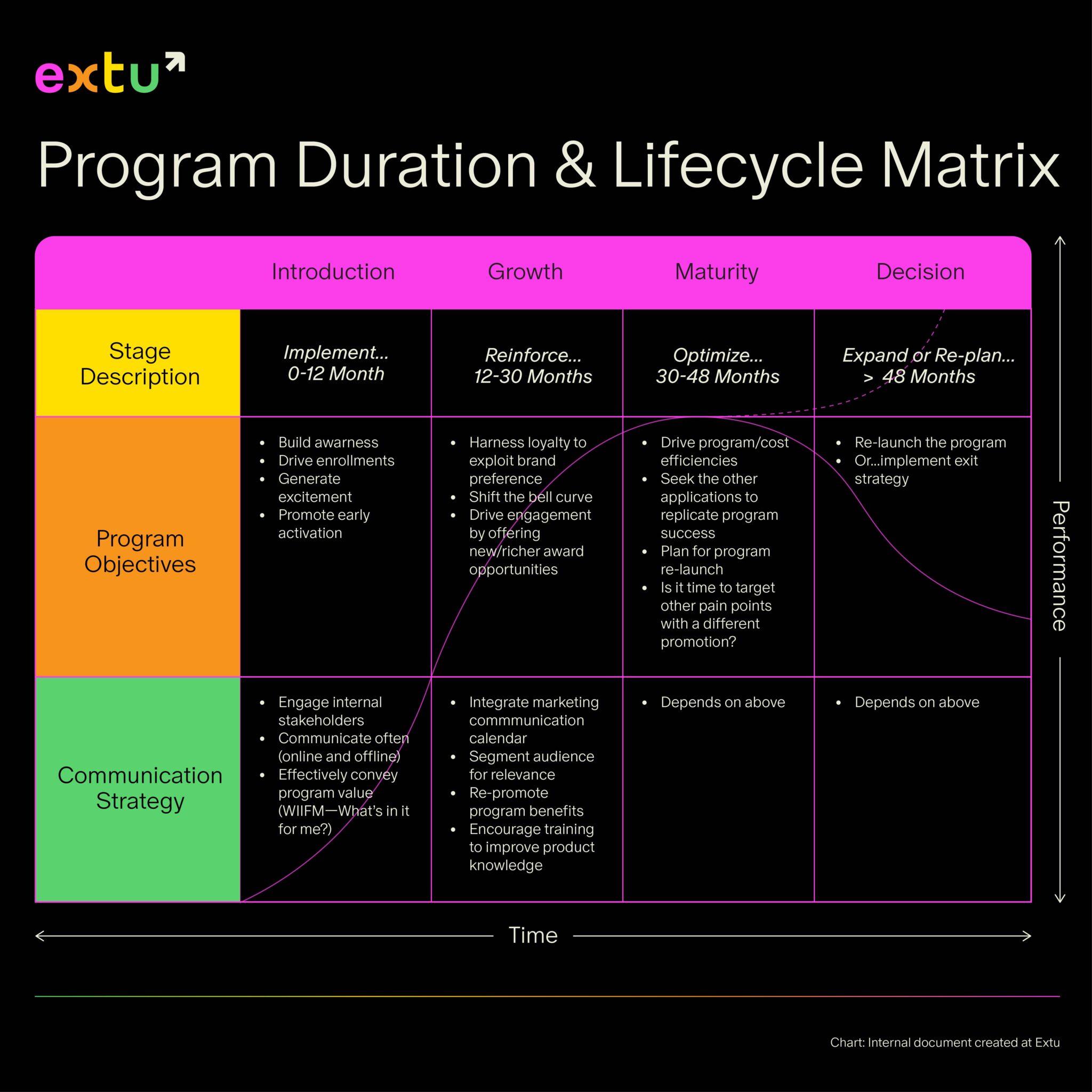
* Program lifecycle benchmarks come from Extu’s Benchmarks of a Successful Channel Incentive Program research.
When growth plateaus, don’t consider it a failure. It’s normal for the shine to wear off of your loyalty program. The programs that die are the ones that don’t get the attention they need when momentum naturally slows. Build a re-engagement plan into your program roadmap before you need it.
Conclusion
A distributor loyalty program won’t fix a product with quality problems or make up for poor service. But when you’ve covered the fundamentals, it’s one of the most direct tools for influencing what happens at the point of sale. Managed correctly, the results are measurable: enrolled distributors buy more often and in larger volumes, mid-tier accounts move up, and the relationships you’ve invested in hold when the market is unstable or a competitors drop prices.
The most important thing to take from this guide is that a successful distributor loyalty program has to be strategic. It requires clear goals, a segmented audience, rewards that actually mean something to the people receiving them, and the commitment to measure and maintain it over time. Distributors’ favorite manufacturers aren’t always the ones with the best products. They’re the ones distributors trust, know, and want to work with, which doesn’t happen by accident.