

In Brief:
A B2B loyalty program rewards channel partners for buying/selling your products and engaging with your brand. Unlike a one-time promotion, it runs continuously and deepens relationships.
B2B loyalty programs work differently than consumer programs due to the smaller customer base, more complex purchase relationships, and higher stakes per account. The case for using one comes down to math: customer retention costs less than acquisition.
When structured correctly, a loyalty program pays for itself through the growth it generates. Program types range from points-based purchasing programs and tiered structures to SPIFFs, training incentives, and group travel. Building one requires clean data, specific goals, partner segmentation, the right rewards, and strategic budgeting. ROI is measured through metrics that track engagement and business impact.
Jump to:
→ What is a B2B loyalty program?
→ How is a B2B loyalty program different from a B2C loyalty program?
→ Why should you use a B2B loyalty program?
→ What are some examples of B2B loyalty programs?
→ How do you set up a B2B loyalty program?
→ How do you measure B2B loyalty program ROI?
Business to business (B2B) selling means you sell to other businesses, not directly to consumers. Most B2B companies have a relatively small number of customers, often only a handful of accounts that generate the majority of their revenue. That means every customer relationship matters more, and losing one hurts more than it would for a business with millions of customers to fall back on.
Those customers are still actively pursued by competitors. According to the Home Improvement Research Institute (HIRI), a 30% discount is all it takes for a buyer to try a new brand or supplier. In B2B markets where products are often similar, price isn’t always the deciding factor, but a competitor willing to offer the right deal at the right moment can absolutely be.
A B2B loyalty program is a way to get ahead of that problem. It gives your partners a concrete reason to stay with you, spend more with you, and prioritize your brand over others. When built correctly, it protects and grows existing revenue.
This guide explains what a B2B loyalty program is, how it differs from business to consumer (B2C) loyalty programs, why it works, and how to build one.
What Is a B2B Loyalty Program?
A B2B loyalty program is a structured program that rewards business customers (typically channel partners, dealers, distributors, or contractors) for buying from you, selling your products, and/or engaging with your brand over time.
Business customers, more commonly called partners, earn rewards by hitting purchasing goals, completing product training, submitting sales documentation, or engaging with your campaigns. Those rewards can take the form of points redeemable through an online catalog, cash or debit cards, gift cards, or experiences like incentive travel. The program runs continuously, not as a one-off promotion, which is what separates it from a discount or a sales performance incentive fund (SPIF/SPIFF).
The goal is to make doing business with you more valuable than doing business with a competitor—not through price alone, but through the relationship and the benefits that come with it.
When structured correctly, a B2B loyalty program is also self-funding. You set a sales goal just above your breakeven point. Partners hit that goal to qualify for rewards. The incremental sales they generate cover the cost of the program. At 20% partner growth, for example, a program running on a 1% budget against a $100,000 partner account can return 300% ROI on margin.
B2C vs. B2B Loyalty Programs
Most people’s mental model of a loyalty program comes from B2C programs like Starbucks Rewards, airline miles, a punch card at the local sandwich shop. B2B loyalty programs serve a different purpose and work differently in almost every respect. The key differences are:
The customer base is smaller. Where Starbucks has about 15 million loyalty members, a successful B2B company might have ten meaningful accounts. That difference changes everything about how a program should be designed. B2B loyalty programs can’t rely on mass appeal. They have to adapt to the fact that every partner relationship is distinct.
The participants have a different relationship to your brand. B2C consumers buy your product for themselves. In B2B sales, partners usually buy your product and sell it to others. A B2B loyalty program has to serve both motivations: rewarding them for what they buy and incentivizing them to sell your brand over your competitors’.
The goal is depth, not breadth. B2C loyalty programs are designed to reach as many people as possible. B2B loyalty programs are designed to deepen specific relationships. The focus is on retaining your top accounts and growing your mid-tier ones — not signing up as many participants as you can.
Sales verification works differently. B2C companies sell directly to buyers. In B2B, your partners sell to their own customers, which means you don’t always have direct visibility into those transactions. A good B2B loyalty program includes tools for submitting and verifying claims such as invoices, receipts, and warranty registrations. Partners get rewarded and you get reliable data on what’s being sold.
Training matters. B2C customers don’t need to know much about a product to buy it. In B2B, your partners are often the ones selling your product to end customers. If they don’t understand it well enough to recommend it confidently, they’ll default to whatever they know best, which may be a competitor’s product. B2B loyalty programs can reward partners for completing product training, which improves their ability to sell and increases your sales as a result.
The competitive opportunity is greater. Many B2B industries operate under standards that limit how much products can differ from one another. When the products are similar, the relationship becomes the differentiator. A loyalty program is one of the most effective ways to build that relationship.
Why Should You Use a B2B Loyalty Program?
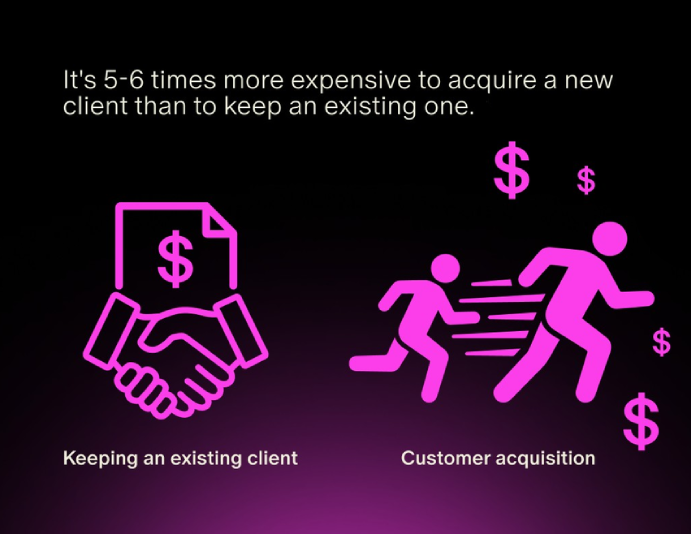
Keeping customers is much cheaper than finding new ones. It’s 5-6 times more expensive to acquire a new client than to keep an existing one. Returning customers are also more valuable; they spend 67% more than new customers. In B2B, where each customer represents a significant share of revenue, the math on retention versus acquisition is not close.
Retention has a direct effect on profitability. A 5% increase in customer retention increases profits by 25% to 95%. Companies with strong loyalty programs grow revenues 2.5 times faster than competitors and generate 100-400% higher returns to shareholders.
Your top customers are also your competitors’ top targets. In most B2B companies, the top 20% of customers generate 80% of revenue. Those are also the accounts your competitors most want to win. A loyalty program gives those partners a real reason to stay: rewards they’ve accumulated, a relationship they value, benefits they’d lose by switching.
Loyalty programs build more than transactions. A study by Google and CEB found that B2B customers’ loyalty is more influenced by a company’s brand values and trustworthiness than by business value alone. A loyalty program communicates to partners that you value the relationship beyond the purchase order.
They generate useful data. 50% of businesses use their loyalty program to gain insight and data about their customers. The purchasing behavior, engagement patterns, and preferences you learn through a loyalty program make your marketing sharper, your sales conversations more relevant, and your decisions better informed.
B2B Loyalty Program Examples
B2B loyalty programs can be built around different goals, reward types, and partner segments. Here are six common program types.
1. Points-Based Purchasing Program
Partners earn points for every dollar they spend, which they redeem through an online reward catalog. This format works across partner tiers because the rewards scale with spend: large partners earn significantly more than smaller ones. Points programs are good for long-term engagement because partners saving toward a high-value item stay actively involved over time. Integrating a points program with an e-commerce platform can increase average order quantity by 319%.
2. Tiered Loyalty Program
Partners are grouped into tiers based on their spend, with better rewards available at higher tiers. A mid-tier partner who increases spend moves up to a tier with bonus point multipliers or exclusive promotions. A top-tier partner receives the highest-value rewards and recognition. Tiered programs work well because they give mid-tier partners a clear reason to spend more, while giving top partners a reason to stay. Buyers are 56% more likely to participate in programs that offer tiered rewards and exclusive treatment for top customers.
3. Sales Incentive / SPIFF Program
Partners earn cash rewards, debit cards, or gift cards for hitting defined sales targets within a specific time window, usually tied to a particular product. SPIFFs are designed for short-term urgency: pushing a new product, clearing inventory, or competing aggressively in a specific window. Cash-adjacent rewards rank highest when partners are asked what would most encourage their loyalty to a supplier.
4. Training Incentive Program
Partners earn rewards for completing product training, passing knowledge quizzes, or filling out surveys. This type of program directly addresses one of the most common B2B sales problems: partners who don’t know enough about your product to recommend it confidently. Three out of four sales reps are underperforming, often due to insufficient product knowledge. Rewarding education gives partners a reason to engage with training they might otherwise skip.
5. Incentive Travel Program
Top-performing partners earn a spot on a group trip, an experience designed to reward their loyalty and deepen the relationship in a way that no catalog reward can match. Incentive travel delivers a potential $2.90 return for every $1 spent. This program type is suited to your top-tier partners, whose loyalty most needs to be protected and recognized.
6. Partner Retention Program
A retention program rewards partners for their business. This matters for top-tier accounts who may already be at maximum spend. Offering a loyalty program and then disqualifying your most loyal partners because they can’t grow further is a costly mistake. A standalone retention component ensures those partners feel recognized regardless.
How Do You Set Up a B2B Loyalty Program?
Step 1: Start with your data.
Before you design anything, understand your business at a baseline level. Which products have the best margins? Which partners are growing, and which are flat or declining? Which accounts are most at risk of switching? Analyze your sales trends, partner segments, product margins, and buying patterns. This data shapes every decision that follows. Without it, you’re guessing.
Key inputs to gather: sales trends by product and channel, partner segments by spend volume, profitability by segment, and engagement signals like email open rates, web visits, and responses to outreach.
Step 2: Set specific goals.
Broad goals like “increase loyalty” or “grow sales” won’t produce a program that works. Get specific: increase sales of a particular product category, grow mid-tier partner spend by a defined percentage in a given quarter, reduce churn in a specific account segment. For the program to pay for itself, the qualifying threshold must be set above your breakeven point. If your program costs the equivalent of a 4% sales lift, set the qualifying goal at 5% or higher.
Break annual goals into quarterly targets. Shorter time frames create more urgency, generate more engagement, and give you more opportunities to course-correct.
Step 3: Segment your partners.
Divide your partners into tiers based on purchasing behavior and revenue potential— typically large (top 20%), mid-tier, and small. Each tier needs different goals, messaging, and rewards. Large partners need loyalty recognition; mid-tier partners need growth incentives; smaller partners need easy, attainable goals that don’t require big shifts in behavior. A program that treats everyone the same will underperform at every level.
Step 4: Choose your rewards.
Match rewards to what motivates each partner segment. Points-based online catalogs work well for long-term engagement. Cash and debit cards are effective for short-term promotions. Gift cards work well for partners who want to reward their own sales employees. Group travel is the right choice for your top-tier partners.
Step 5: Build the financial structure.
Set minimum spend requirements so that only partners who generate enough incremental margin to cover program costs can participate. Establish a budget allocation, typically around 1-2% of partner sales. Calculate your breakeven growth threshold and set qualifying goals above it. Layer in tiered bonuses for spend above the threshold. Add supplementary earning opportunities like double-point promotions or training incentives to keep engagement up between standard earning cycles.
Step 6: Plan your communications.
A program no one knows about won’t work. Launch with a campaign that generates genuine excitement—a kickoff promotion, early-enrollment bonuses, or a themed campaign tied to something partners care about. Personalize ongoing communications based on each partner’s segment and purchase history. Automate reminders for approaching deadlines and quarterly goal updates. Use email, SMS, direct mail, and a mobile-optimized platform consistently.
Step 7: Get outside support where you need it.
A well-run loyalty program requires consistent attention across reward fulfillment, participant support, creative communications, and data reporting. Most B2B organizations don’t have dedicated resources for all of that. 17% of participants will leave after just one bad experience, which means gaps in support or fulfillment have real consequences. Bringing in outside specialists for the pieces your team can’t own protects the program from the failure points that most commonly cause them to lose momentum.
How Do You Measure B2B Loyalty Program ROI?
To measure the success of a B2B loyalty program, you should track key performance indicators (KPIs), both leading and lagging.
Leading indicators tell you how the program is performing before you can see it in revenue. These include how many of your target partners have enrolled, how many have activated their accounts, how often they’re logging in, how many points have been assigned versus redeemed, and how your program emails are performing. These metrics tell you whether partners are engaged, which has to come before revenue growth can follow.
Lagging indicators tell you what the program has produced. This includes overall sales increase, sales increase from program-specific products and participants, average order size and frequency, overall ROI, participant retention rate, and number of referrals. These are the metrics that demonstrate business impact.
Calculate ROI
The formula for calculating B2B loyalty program ROI is value minute cost, divided by cost, or:
ROI = (Value – Cost) / Cost
If you invest $100,000 in your program and generate $150,000 in incremental sales, your ROI is 50%. A well-structured program at 20% partner growth delivers significantly more. Extu’s model shows 317% ROI on margin at that level, compared to 19% at breakeven. Measuring ROI demonstrates that the program is working.
The point of measurement isn’t just to report results, but to improve the program. Use your KPIs to identify which partner segments are underperforming and why, which reward types are driving the most engagement, and where drop-off is happening. Test new approaches (double-point campaigns, seasonal promotions, flash bonuses, etc.) and measure their impact. An actively-managed loyalty program will consistently outperform one that’s running on autopilot.
Conclusion
A B2B loyalty program can turn a transactional relationship into one your partners actively want to protect. What that looks like in practice: partners earning points toward rewards they actually want, moving up tiers as they grow with you, completing training that makes them better at selling your product, earning a trip that neither of you will forget. Behind all of it is a program built on real data, clear goals, and a financial structure that pays for itself.
The companies that do this well will retain more customers, grow faster, generate better margins, and build relationships that are genuinely hard for a competitor to break.
That’s what a B2B loyalty program is for.
If you’re ready to build one, Extu can help.