

B2B attribution is doesn’t have to be messy, but it is. Long sales cycles, multiple stakeholders, and a blur of disconnected touchpoints make proving ROI feel impossible. That’s why the right B2B attribution tools don’t just crunch data—they give you control, clarity, and confidence in every decision.
The B2B Attribution Challenge
B2B transactions often involve longer decision-making processes and multiple influencers. This complexity necessitates advanced attribution models that can accurately assign credit across various touchpoints. Multi-touch attribution (MTA) models, such as linear, time-decay, or position-based, provide a more nuanced view by evaluating the entire buyer’s journey.
When evaluating B2B attribution tools, consider the following essential features:
1. Multi-Touch Attribution Models
The multi-touch attribution (MTA) model is an approach to marketing designed to understand the full customer journey. Rather than attributing a conversion or deal to a single interaction, MTA looks for the “whole story.” This approach aligns with the intricate nature of B2B sales cycles, which are getting longer and more complex.
On average, 13 people within an organization are involved in the buying decision, with 89% of purchases involving two or more departments. (Forrester)
When selecting a multi-touch attribution tool, prioritize the following features:
Customizable Attribution Models
Avoid one-size-fits-all solutions. Your tool should offer various B2B attribution models—linear, time-decay, position-based—and allow customization to align with your unique sales cycle and customer journey. Flexibility is non-negotiable.
Real-Time Data Processing
Waiting days for data is unacceptable. Your tool should provide real-time or near-real-time analytics, enabling you to make timely decisions and adjust strategies on the fly.
Account-Based Attribution Capabilities
Your attribution tool must track and analyze interactions at the account level, not just individual leads, to provide a comprehensive view of the buying process.
Advanced Analytics and Reporting
Look for tools that offer robust analytics features, including predictive analytics and customizable reporting dashboards. These capabilities are essential for deriving actionable insights and measuring the effectiveness of your marketing strategies accurately.
Scalability and Flexibility
As your business grows, your B2B attribution needs will evolve. Choose a tool that can scale with your organization and adapt to increasing data volumes and changing marketing strategies without compromising performance.
2. Customer Data Platform
You probably know what a customer relationship management (CRM) platform is: your sales team’s personal Rolodex on steroids. But you need more than just a record of conversations and conversions. You need to connect the dots between marketing touches, website visits, ad impressions, webinar signups, and revenue.
56% of B2B marketers say data accuracy is one the biggest challenges to understanding the impact of their campaigns. (DemandBase)
That’s where a customer data platform (CDP) comes in. A CDP pulls customer data from everywhere—your CRM, your website, your email campaigns, your paid media—and stitches it together into one unified, usable profile. In B2B marketing, where buyers bounce across platforms like caffeinated squirrels before making a decision, a CDP isn’t just helpful for attribution. It’s essential.
But not all CDPs are created equal. If you’re evaluating options, here’s what your CDP absolutely needs to do to actually help you measure and improve attribution (instead of just hoarding more data you’ll never use):
Real-Time Data Ingestion and Processing
You need a CDP that pulls in data from all your sources instantly and updates customer profiles in real time. Attribution models are only as good as the freshness of your data.
Identity Resolution Across Systems
In B2B, one person might register for a webinar with a Gmail address, download an ebook with their company email, and then show up in your CRM under yet another variant. A proper CDP can recognize that all those touches belong to the same human (and account) and merge them intelligently.
Cross-Channel Journey Mapping
You’re not just tracking form fills anymore. Buyers are ghosting around ads, emails, social posts, webinars, live chats—you name it. Look for a CDP that can map the entire customer journey across multiple channels and assign value to those touchpoints when building attribution models.
Audience Activation and Data Syndication
This isn’t just about collecting data—it’s about using it. Your CDP should push unified audience segments out to ad platforms, your marketing automation system, or your email tools. Bonus points if it can push conversion and engagement data back in for attribution reporting.
3. Marketing Automation Platforms
If your marketing automation platform doesn’t provide you with attribution data, it’s just a glorified email blaster. B2B marketing automation isn’t just about pushing messages. It should deliver insights about audience engagement and interest.
Your marketing automation tool is where a huge chunk of buyer interactions happen: form fills, webinar registrations, email opens, asset downloads. If you’re not connecting those dots back to pipeline and revenue, you’re missing half the story.
The right marketing automation platform doesn’t just move leads through a funnel — it tells you which parts of that funnel actually worked. Here’s what you need to make sure your automation tool can actually pull its weight for attribution:
Touchpoint-Level Tracking and Reporting
You need granular visibility — not just “this campaign got 500 clicks,” but “this person engaged with these specific assets before converting.” Make sure the tool can tag and log every interaction to build a full journey history you can later attribute revenue to.
Campaign Hierarchies
If you’re running multi-channel campaigns (and you should be), your tool should be able to nest assets and tactics under a single campaign umbrella. Otherwise, good luck trying to attribute ROI when you’re drowning in random emails and landing pages with no connection to pipeline.
Dynamic Lead Scoring and Funnel Stage Tracking
Good marketing automation tools don’t just push leads to sales — they score them intelligently based on behavior. Make sure your platform lets you track progression through buying stages (awareness, consideration, decision) — critical for multi-touch attribution and understanding where marketing moved the needle.
Closed-Loop Reporting Between Marketing and Sales
If your marketing team is tossing leads over the wall and hoping for the best, you don’t have attribution—you have a black hole. A real marketing automation platform must close the loop by syncing lead data with your CRM at every stage (lead, MQL, SQL, opportunity, closed-won). This is non-negotiable if you want to prove marketing’s revenue impact to leadership, know which tactics actually drive real pipeline, and give sales reps the full context of marketing touches before they pick up the phone.
4. Business Intelligence (BI) Tools
Raw data can only take you so far. Even if your CRM is full of notes, your marketing automation system is tracking clicks, and your website is racking up traffic, you need to be able to turn that mess into clear, actionable insights. That’s where business intelligence (BI) tools come in. BI platforms take all the scattered signals from your sales and marketing tech stack and turn them into dashboards, charts, and reports that even your CFO can understand. BI tools tell you what’s working (and what’s draining your budget).
Of course, not every fancy dashboard is a real “intelligence” platform. If you want a BI tool that actually helps you nail attribution, here’s what you should demand:
Multi-Source Data Integration
Your BI platform should easily pull data from your CRM, marketing automation, ad platforms, CDP, and anywhere else you’re running campaigns. If you need a six-month custom IT project just to see campaign ROI, you’re using the wrong tool.
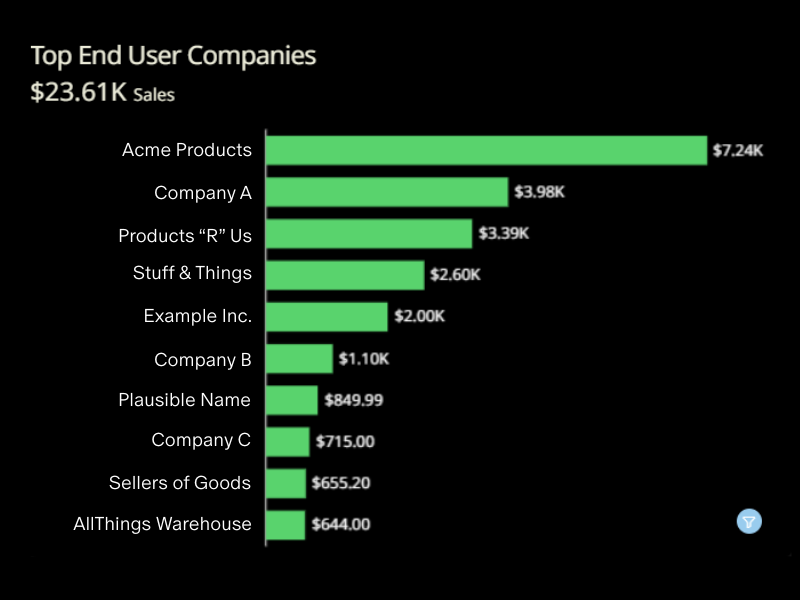
Customizable, Multi-Touch Attribution Reporting
Look for a BI tool that doesn’t just show first-touch or last-touch reporting out of the box. You should be able to build and tweak your own attribution models (linear, time decay, U-shaped, whatever fits your buyer journey) — and see how different models tell different stories.
Drill-Down Capabilities
Pretty dashboards are great. But if you can’t click into a number and see what’s behind it (which campaign, which account, which stage of the journey), you’re just admiring your failure in HD. Pick a tool that makes it easy to slice, dice, and drill into your attribution metrics.
Final Thoughts
Attribution tools should give you more than metrics—they should give you the power to act with confidence. No more guesswork. No more data silos. No more explaining soft metrics to a skeptical CFO.